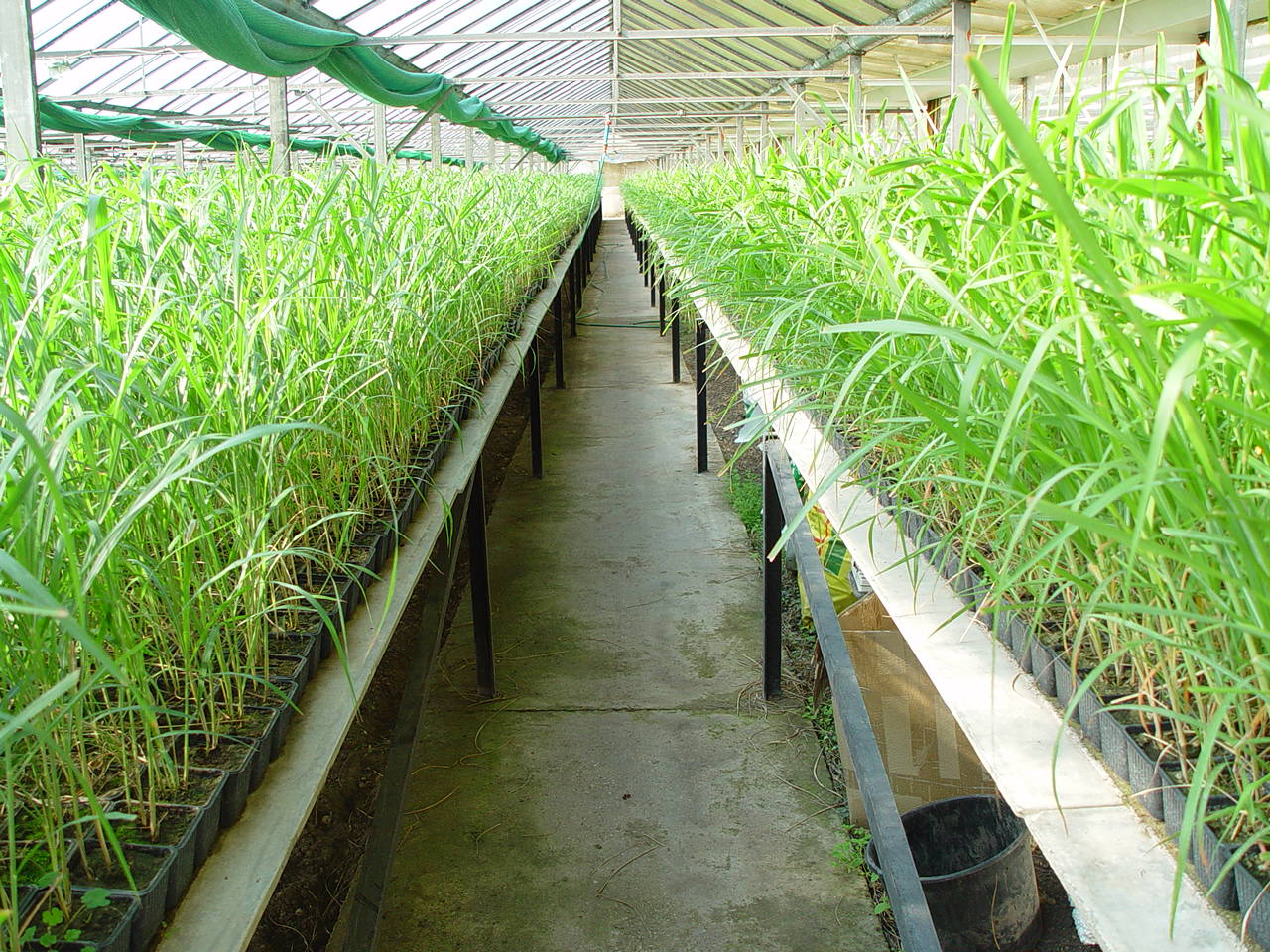
What is Tatai Miscanthus?
The energy reed, Miscanthus sinensis ’Tatai’, is a perennial plant with rhizome (root butt) belonging to the family of lawn grass species (Poaceae). This is a commercial crop with high lignin and lingo-cellulose fibre content performing C4 photosynthesis.
Its straight reed-type stems of 10-13 mm diameter are thin and have no branches. If planted in spring, the height of the plant reaches 2 meters by the end of the year and even 3-5 meters in the following years. The rhizome is densely branching and makes up an effective storage system. The roots of the plant penetrate deeply, about 50 cm, into the soil. The extensive and deep roots of the plant are not only important for supplying nutrients to the plant, but may equally play a key role in upgrading the soil structure and the quality of the plantation. The moisture content of the plants decreases to 10-15% by the time the winter harvest takes place. In autumn, the mineral content of the stems also decreases substantially, since the majority of minerals are reintegrated in the rhizome as a nutrient reserve and together with the leaves fallen enable a low nutrient replacement necessity for plantations. The species generated as an outcome of plant improvement activities have extremely favourable properties, namely: